
What the signs usually point to
The warning sign is not always a visible service. It is often a combination of incomplete records, work close to the boundary, and a dig route that would be expensive to reopen if the assumptions are wrong. A common example is a semi-detached house with shared side access where boundary and service uncertainty before fencing and extension works and the next decision has to be made around shared access route with neighbour.
Used properly, this kind of example clarifies the decision without turning the whole article into a single case study.
How to check it properly
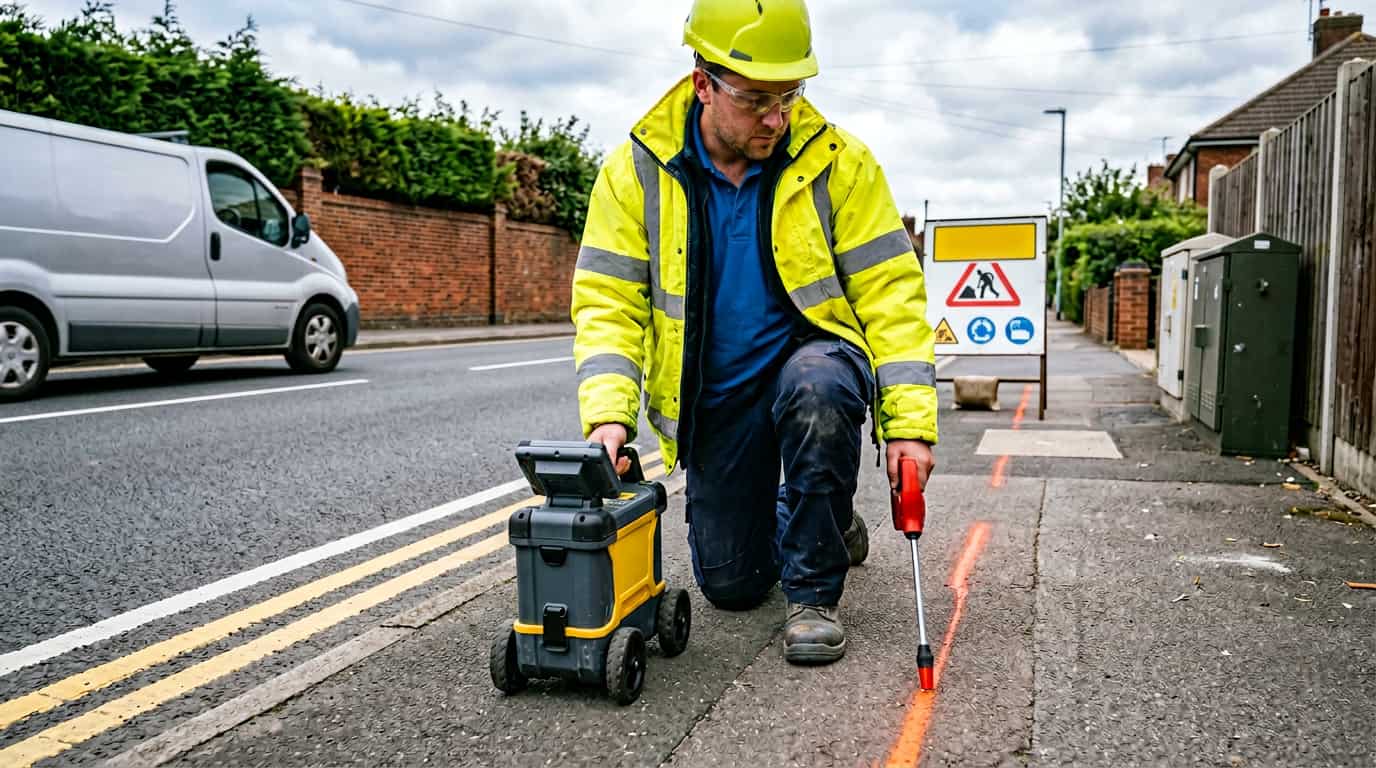
The practical step is to check whether the excavation decision depends on buried-service confidence or measured boundary position. Where it does, the survey becomes a control measure rather than an optional extra. For a local route, start with Utility Survey in Kingston.
The practical value is in checking the issue against the real site conditions instead of relying on generic assumptions about the service or scope.
When to get specialist input
That is what makes the survey worthwhile: it lowers the chance of the project making an avoidable mistake before fencing, digging, or foundations lock the site into a harder route. The aim is to make the next decision clearer before time, cost, or disruption widen unnecessarily.
That usually means confirming whether the issue needs a survey, a repair route, a tighter scope, or a more informed quote.
If this article matches what you are seeing on site, the next step is a scoped quote based on the actual issue rather than guesswork.
Check survey availabilityRelated services and guides
This guide is most useful before boundary-adjacent digging, extension work, or contractor mobilisation where the real risk is hidden information rather than obvious surface conditions. If you need a local service page, start with Utility Survey in Kingston. For the same area, the most relevant supporting pages are topographical survey in Kingston, boundary survey in Kingston.
For broader reading, use surveys needed before development work starts. If you want to compare it with a live job, utility survey before excavation on constrained extension site shows how the issue played out on site.
If this article matches the issue you are planning around, the next step is a scoped quote that reflects the real site constraints and the right service route.
Check survey availability